Published by The Next Lab: research summaries, what a COA should show, and the lab reports available for our submitted samples.
Research use onlyRev 03 · 12 September 2026Issuing lab · Freedom Diagnostics
Why are COAs important? Peptides are not just compounds — they need stabilizers. It takes chemists to create a perfect vial, so testing is non-negotiable. Here is how to verify the quality of your product:
Peptides: short chains of amino acids. Some are approved medicines. A lot of the ones people talk about online are still research-stage.
What we publish: Nine reports with identity, measured fill, purity, endotoxin and microbial screening results. Each entry shows its lot and verification status.
Our approach: show the report, its lot and its verification status. A report covers the sample tested, not every vial in the catalogue. Research use only; no dosing guidance here.
The catalog: open the site, then create an account to see it.Open site →
01
The compounds.
Six compounds, graded outcome by outcome on the human record. A grade belongs to the evidence, never to the compound.
Aregulatory approval, or replicated well-powered human trialsBat least one well-powered randomized human trialCsmall or open-label human trials onlyDanimal or mechanism data onlyEtested in human trials and not supported
Every study cited is linked by PubMed identifier in the sources at the end. NL-T10 and NL-R15 sit in the lot table below by catalogue code; their certificates are linked there.
Sixteen amino acids, encoded inside mitochondrial DNA. Identified in 2015 at the University of Southern California. The body releases it during exercise.1,2
Insulin sensitivity and blood glucose
In mice, MOTS-c prevented diet-induced and age-related insulin resistance by activating AMPK in skeletal muscle.1 The first human trial, in adults with prediabetes, is registered and recruiting.
Grade D
Fat and body weight
Prevented diet-induced obesity in mice fed a high-fat diet.1 No completed human outcome trial.
Grade D
Physical capacity with age
Improved physical performance in young, middle-aged and old mice; treatment begun late in life raised late-life capacity.2 In humans, only the body's own MOTS-c has been measured — it rises after exercise.2
Grade D
Longevity
A mitochondrial variant that alters MOTS-c is more common in long-lived Japanese people.3 A population association, not a treatment result.
Grade D
The record. Mouse, and consistent. The human trial is running.
A 15-amino-acid fragment of a protein found in human gastric juice, described by a Zagreb pharmacology group in 1993.4 The most studied repair peptide in the category — almost entirely in animals.
Tendon and ligament repair
Transected rat Achilles on daily BPC-157: higher load-to-failure and better function through day 14.5 Tendon cells migrate and survive oxidative stress better in culture.6 No human trial.
Grade D
Gut lining
Where the molecule started, and the deepest part of the record: colonic damage cut dose-dependently in rats.7 No human trial.
Grade D
Muscle injury
Crushed rat muscle healed better on 14 days of BPC-157, by function and by creatine kinase.8
Grade D
Bladder pain
The only prospective human series: twelve women, one intravesical 10 mg dose, all twelve responders.9 Single arm, no control.
Grade C
Mechanism. Proposed to act through nitric oxide signalling and VEGFR2 — new vessels reach injured tissue faster in rodents.10
The record. A 2025 systematic review found 36 studies: 35 preclinical, one clinical.11 The animal record is deep. The human record is thin.
Two releasers of the body's own growth hormone, on two different pituitary receptors, in one vial. CJC-1295 is a growth-hormone-releasing-hormone analog first published in humans in 2006.12 Ipamorelin is a five-amino-acid selective secretagogue acting at the ghrelin receptor, developed at Novo Nordisk in the 1990s.14 One raises the size of the pulse. The other triggers it.
Form. This vial carries CJC-1295 without DAC. The published trials studied the albumin-bound DAC form, whose half-life runs 5.8 to 8.1 days.12 The no-DAC form shares the receptor; its own trial record is essentially absent.
Raising growth hormone and IGF-1
Two randomized placebo-controlled dose-ranging trials in healthy adults aged 21 to 61: mean GH up 2 to 10-fold for six days or more, IGF-I up 1.5 to 3-fold for 9 to 11 days.12 DAC form.
Grade B
Holding the natural pulse pattern
In healthy men, trough GH rose 7.5-fold a week after one dose, with pulse frequency and amplitude unchanged.13 DAC form.
Grade B
Acute GH release — ipamorelin
Dose-proportional GH release across five infusion rates in 40 healthy men, one peak at 0.67 hours.15 Intravenous; no published subcutaneous human data.
Grade C
Muscle gain
No trial has measured lean mass, fat mass or strength on either compound. With growth hormone itself, fat-free mass and body water rose while muscle protein synthesis and strength matched placebo.17
Grade D
Selectivity. In swine, ipamorelin released GH without raising ACTH or cortisol.14 Its only randomized human trial was for gut motility after bowel surgery, 114 patients — it did not separate from placebo.16
The record. The hormone rises. Reliably, in trials. What that does to tissue was not measured.
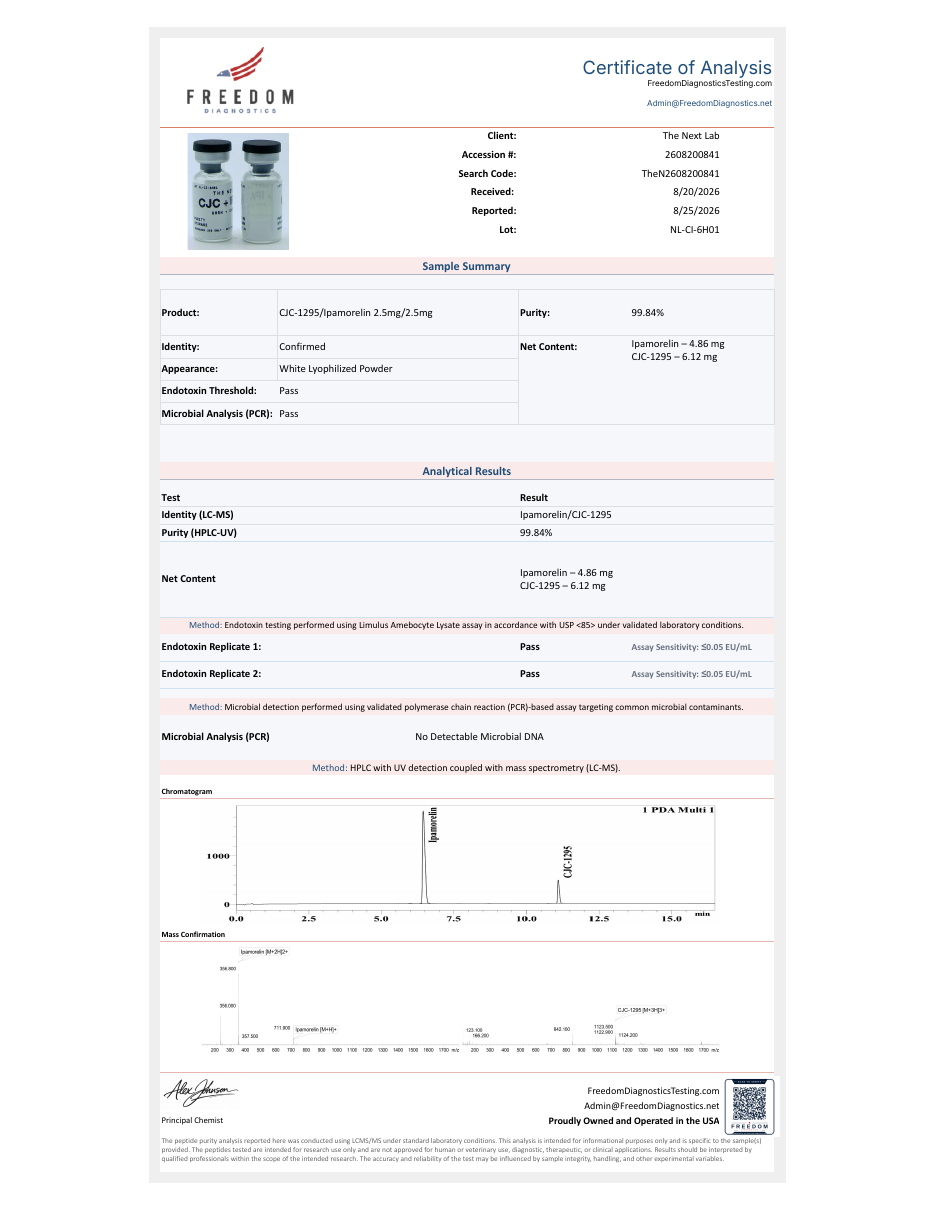
Strength heading under review. The report heading says 2.5 mg + 2.5 mg; the store lists 5 mg + 5 mg. Measured results are shown as reported while that discrepancy is checked.
A synthetic 44-amino-acid growth-hormone-releasing-factor analog. Approved in the United States in 2010 for one indication. The deepest clinical paper trail in its class.
Visceral fat in HIV-associated lipodystrophy
412 adults, 26 weeks: CT-measured visceral fat −15.2% against +5.0% on placebo, IGF-I +81%.18 A second trial in 404 replicated it. Stopping reversed it.19
Grade A
Visceral fat in abdominal obesity without HIV
60 adults with low GH output, 12 months: visceral fat −35 cm² against placebo, triglycerides −37 mg/dL. Subcutaneous fat unchanged.20
Grade B
Liver fat
61 adults with HIV and fatty liver, 12 months: liver fat down 37% relative.21 Not replicated.
Grade B
Cognition in older adults
152 adults aged 55 to 87, 20 weeks: executive function improved, body fat −7.4%. Fasting insulin rose in the impaired group.22
Grade B
The record. The compartment it moves is measured by CT, not a mirror. Body weight stays neutral — the label says so.
A copper-binding tripeptide found in human plasma, identified in 1977. Plasma levels fall with age. Circulates as a cosmetic ingredient and as a research compound.
Collagen in skin
In cultured fibroblasts, collagen synthesis rises from about one picomolar.23 In rat wound chambers, collagen accumulated at 344% of control.24 No human biopsy endpoint.
Grade D
Diabetic foot ulcer
One multicentre randomized evaluator-blinded trial: 98.5% against 60.8% median area closure, infection 7% against 34%.25 Manufacturer-authored. Unreplicated.
Grade C
Facial wrinkles
The one randomized facial trial with blinded objective endpoints found no difference on wrinkles. The single positive was a patient questionnaire, thirteen people.26
Grade D
Venous stasis ulcer
Randomized, 86 patients: indistinguishable from vehicle, beaten by silver sulfadiazine.27
Grade E
Mechanism. The gene-expression record is broad — collagen, decorin and remodelling genes, in the direction of repair.28
The record. Strong in the dish and in the rat. Human trials are few, and two of three are negative. Injected GHK-Cu for skin has no human trial of any design.
The coenzyme every cell uses to carry electrons through energy metabolism. Described in 1906. Levels fall with age. Circulates as an injectable and as oral precursors.
Raising blood NAD+ — oral precursors
Nicotinamide riboside raised whole-blood NAD+ about 60% against placebo over six weeks at 1 g daily in 30 adults.29 Single doses raise it dose-dependently.30
Grade B
Raising blood NAD+ — injection
One uncontrolled six-hour infusion pilot: no rise in plasma NAD+ before hour two; NAD+ in the urine by hour six.31
Grade C
Insulin sensitivity
One 10-week trial of oral NMN in prediabetic women raised muscle insulin sensitivity.32 A 12-week trial of 2 g nicotinamide riboside daily in 40 obese men found no change.33
Grade C
The record. The clinical literature is oral precursors. No randomized trial has given injected NAD+ for any outcome.
Broader evidence files on peptide claims — every source, every grade, updated as trials land — sit at insideyourpeptides.com, a separate research desk with no store and source-linked writeups.
02
COAs to review.
Nine hosted reports: eight lab-verifiable, one awaiting confirmation.
What mattersCompare the measured amount, purity, lot and verification status.
Swipe the table → purity · endotoxin · certificate
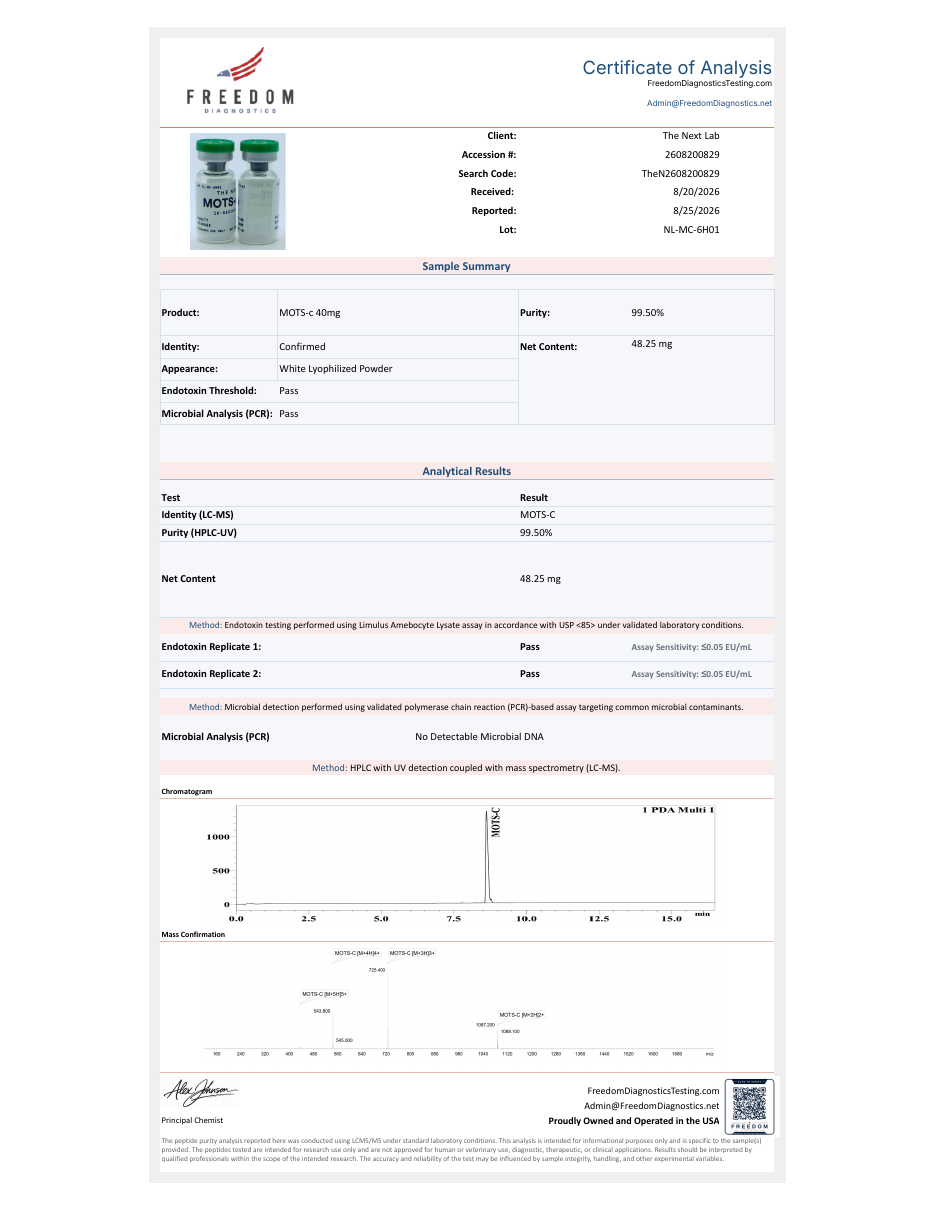
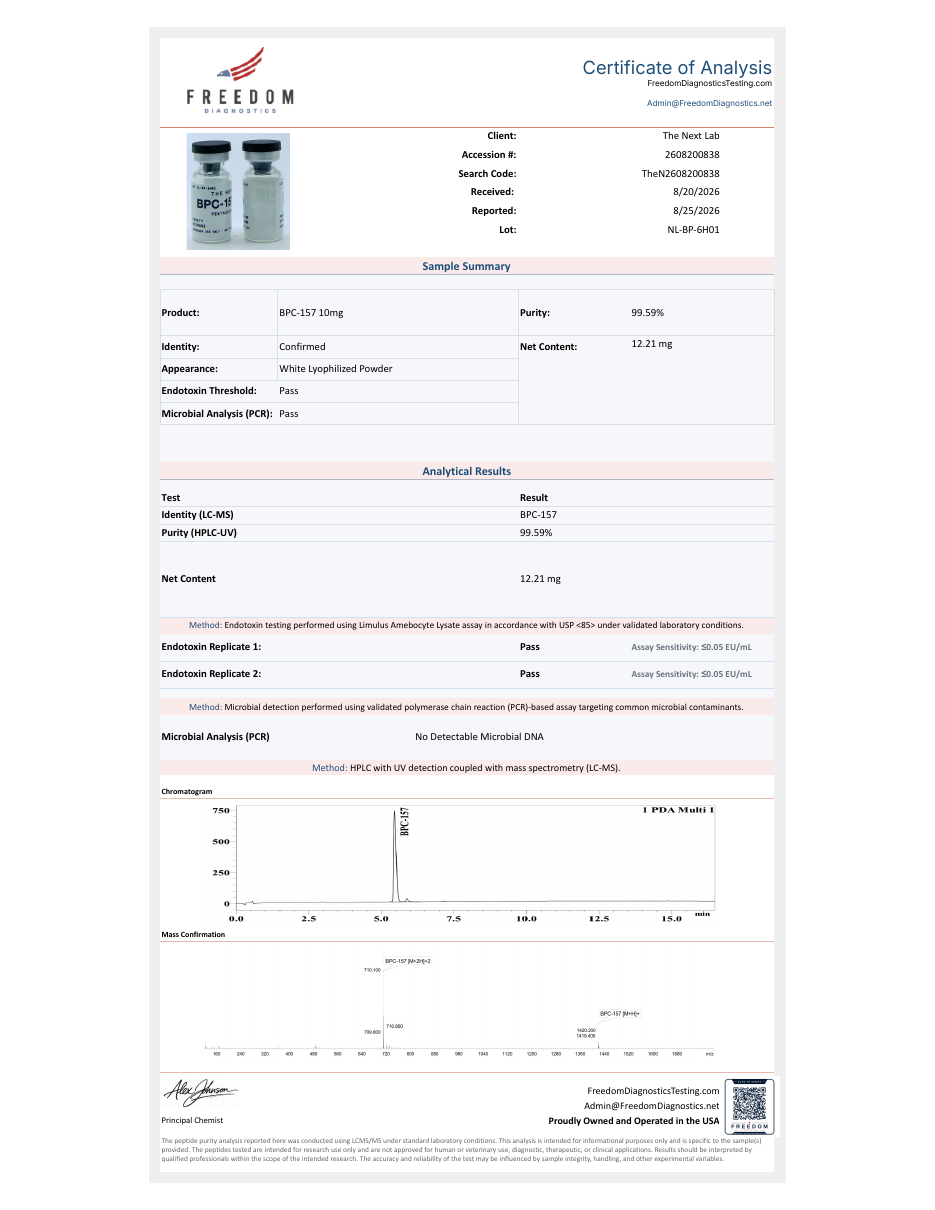
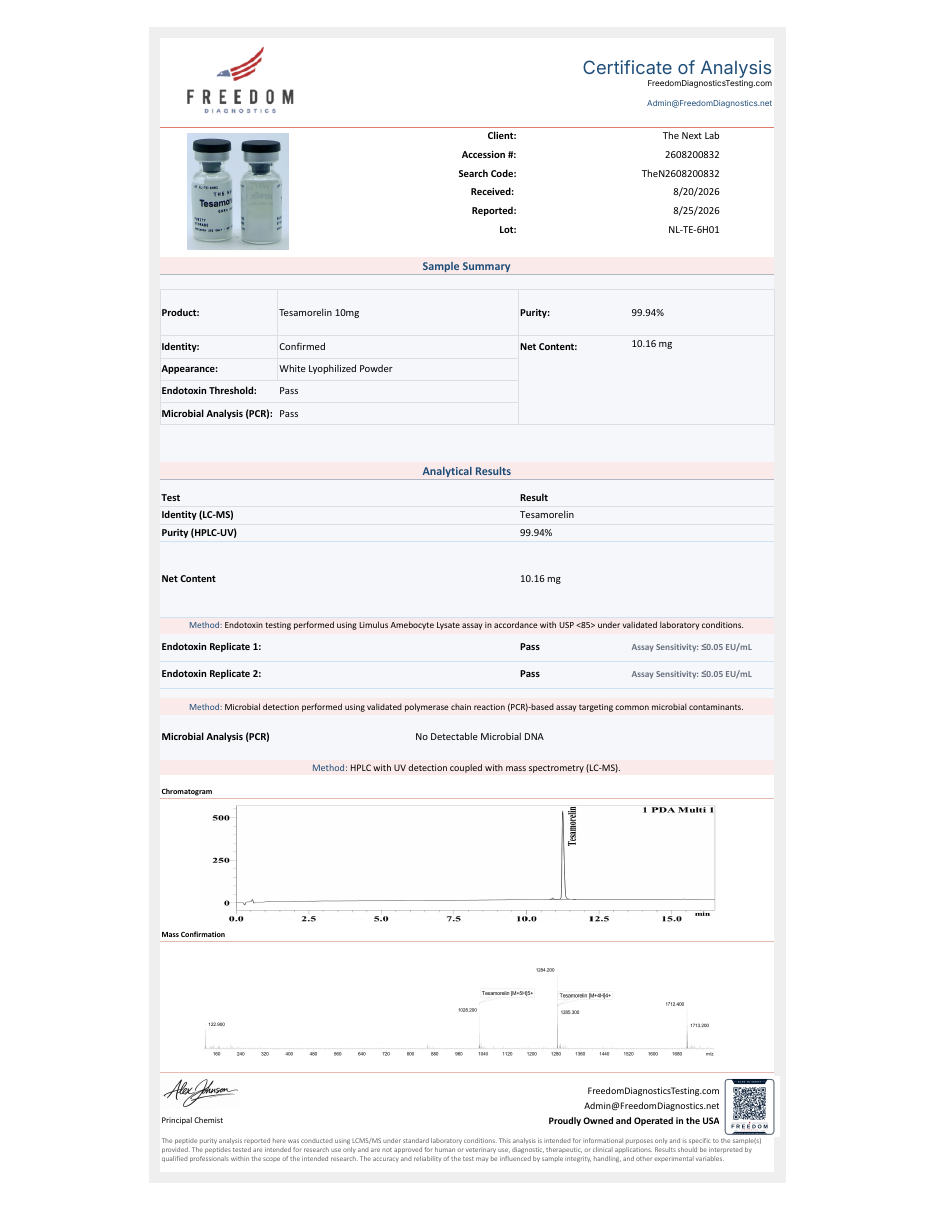
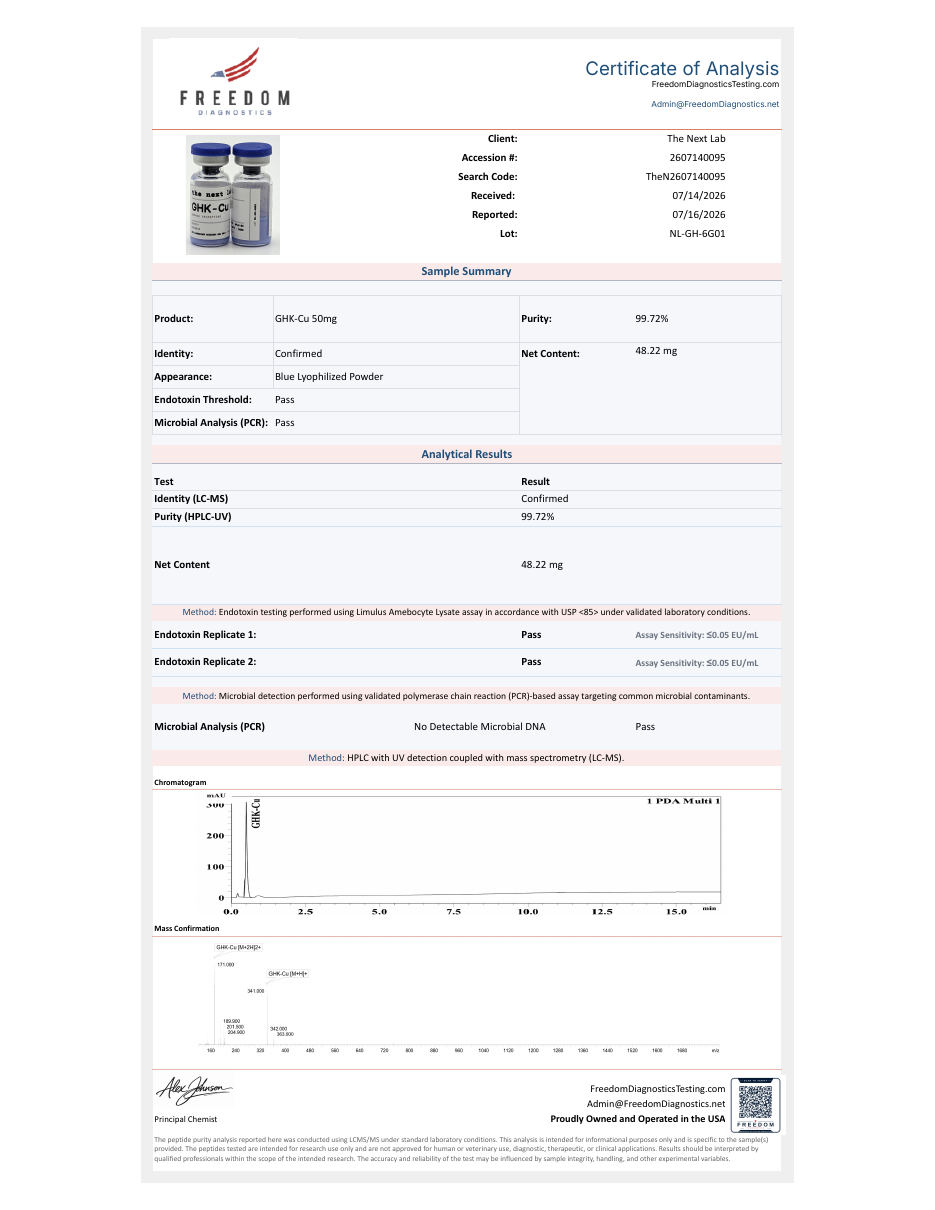
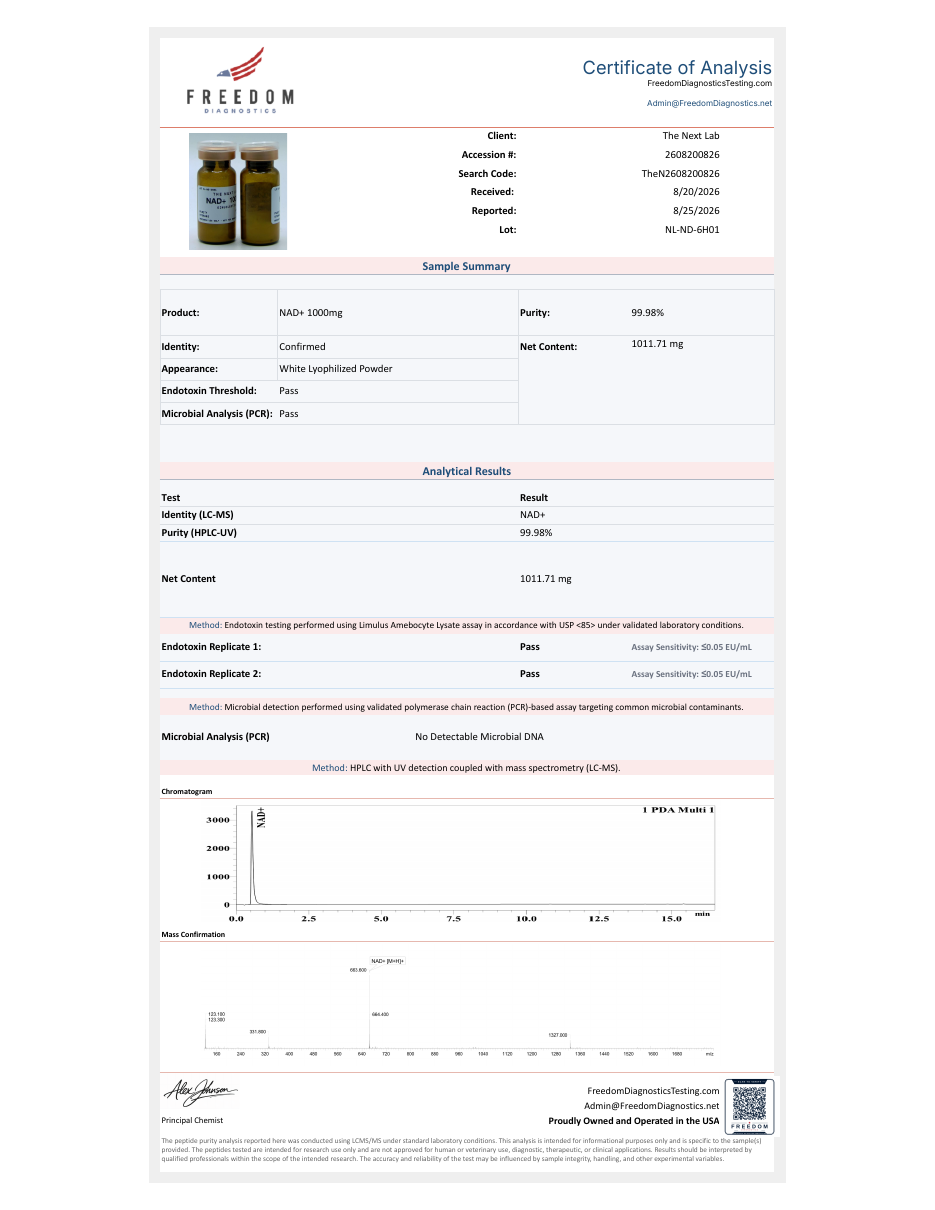
The eight lab-verifiable reports: identity confirmed by LC-MS, two endotoxin replicates passed at ≤0.05 EU/mL under USP <85>, and no detectable microbial DNA.
Fill varies by sample, over and under. Read the measured amount alongside the label, lot and verification status.
Lot codes print as the certificate prints them. NL-T10 and NL-R15 appear by catalogue code, as they do everywhere we publish.
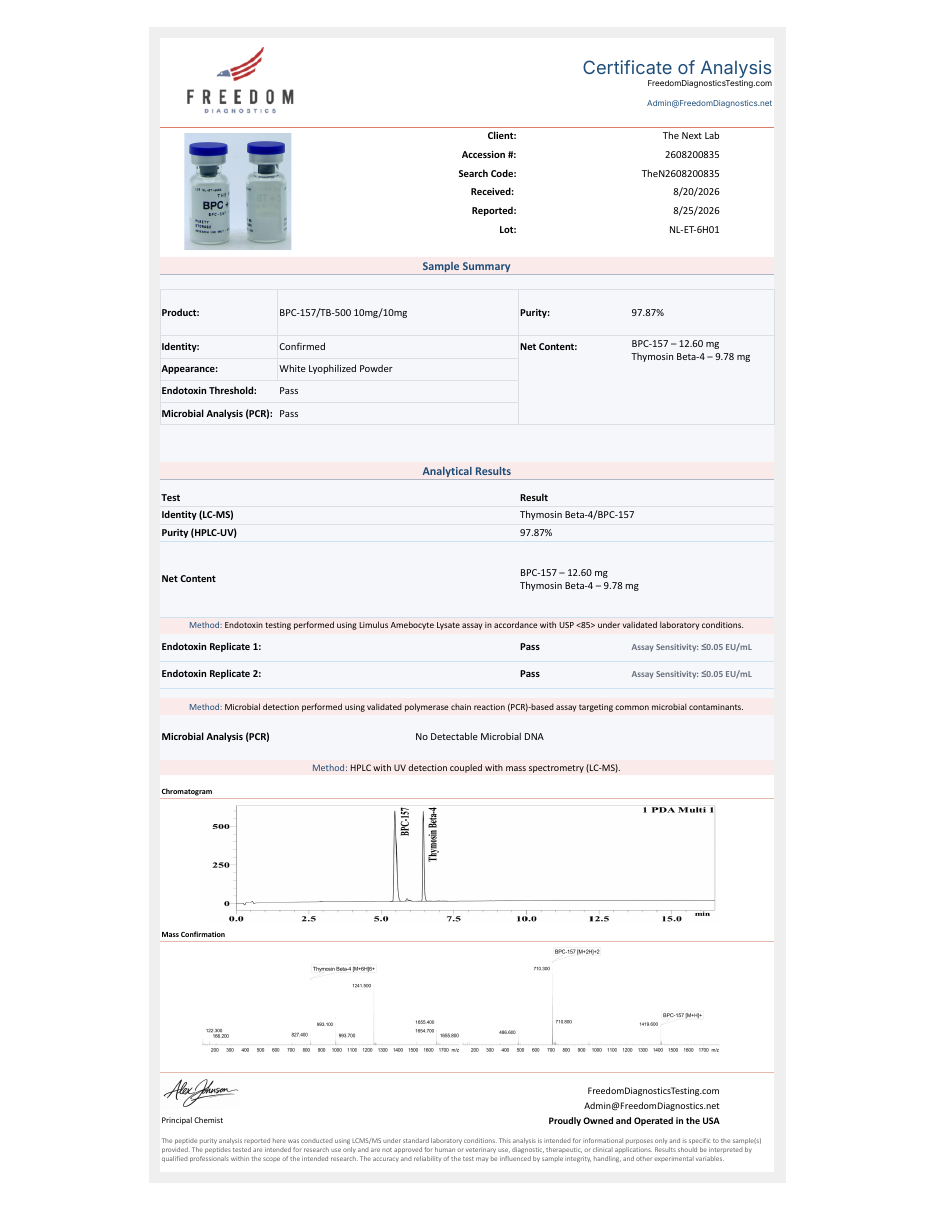
Supplied report · page 1
BPC-157 / TB-500
Awaiting laboratory confirmation. The lab-hosted accession TheN2608200835 is unavailable. This hosted copy was supplied by The Next Lab and is reproduced unchanged.
What the report states: lot NL-ET-6H01, reported 25 August 2026, 97.87% purity, 12.60 mg BPC-157 and 9.78 mg Thymosin Beta-4 against a 10 mg + 10 mg label. It lists identity confirmed, endotoxin pass and microbial PCR pass.
Now the store’s published report. As of 12 September 2026 this replaced the earlier batch report [NL-BT-6G01] on the store listing. The lab-hosted copy still does not resolve, so check the lot printed on your vial against this report before treating it as documentation.
Purity is one percentage. A certificate worth reading carries four more.
Measure
Method
What it answers
01
Net content
measured in mg
How much is in the vial, against the label. The one number a purity percentage cannot see.
02
Identity
LC-MS
Whether the molecule is the stated compound. Mass confirmation, not retention time alone.
03
Purity
HPLC-UV
What fraction of the material in the vial is a single substance.
04
Endotoxin
LAL assay · USP <85>
Bacterial endotoxin against a threshold, at ≤0.05 EU/mL sensitivity. Run in duplicate. Both replicates must pass.
05
Microbial
validated PCR
Whether microbial DNA is detectable. A contamination screen.
Purity is one percentage — how much of the vial is a single compound. It does not tell you the vial holds the milligrams on the label, or that it is clean. And a percentage on its own does not confirm the molecule. That is what the other four are for.
Read net content first. It is the number nobody can argue with, and the one purity cannot see. This report publishes the measured fill, over or under.
The reports list Client: The Next Lab, the accession number and the sample lot. These fields identify what the document describes; they do not independently prove its authenticity or that a future order contains the same lot.
04
Verify your COA.
PDFs can be altered, so be sure to look it up with the third-party testing lab.
01Take the search code from the table — the first four letters of the client name plus the accession number. TheN2608200838.
03Or open the document from the lab's own server: coas.freedomdiagnosticstesting.com/TheN2608200838.pdf. The eight reports listed below were matched to lab-hosted copies by SHA-256 on 31 August 2026.
04Read the client line. Read the lot. Read the measured fill.
Microbial PCR and endotoxin screens do not establish sterility. USP <71> sterility testing was not run.
05
The questions.
The ones that come up. Answered plainly.
01What is a peptide?
A short chain of amino acids. Some are approved medicines in specific settings. Many of the ones people talk about online are still research-stage, with mixed evidence and confident marketing around them.
02What is a COA?
A certificate of analysis — the lab report for one tested sample. It says what was tested, by whom, and under which lot.
03What should a certificate show?
Not just purity. Identity, measured net content, endotoxin, microbial screening, lot number, client name, accession code. Five measures, one document. The COA-reading section above takes them one by one.
04How do you pick a source?
Not by the trend. By the standard: what is the molecule, what does the research actually show, and can the lab prove what is in the vial. Evidence first, paperwork second, claims last.
05Why The Next Lab?
The Next Lab publishes the part most sellers hide or flatten: third-party certificates, lot numbers, measured fill, identity, purity, endotoxin, microbial screening — and the limits of what those tests do and do not prove.
06Whose name is on the certificates?
The reports list Client: The Next Lab. Read that alongside the lot and verification status. The client line alone does not prove authenticity, sample handling or a match to current inventory.
07Why does the measured fill differ from the label?
Fill varies by lot, over and under. A purity percentage cannot see that, which is why net content is measured — and printed here, whichever way it lands.
These are research compounds, not products for use in people. The studies cited are what the literature holds. A grade describes evidence — it never recommends.
10Where does the deeper research live?
At insideyourpeptides.com — a separate research desk from the same owners. Every source, every grade, updated as trials land. No store.
The catalog: open the site, then create an account to see it.Open site →
Sources.
Thirty-three papers. Every identifier checked against PubMed on 31 August 2026.
Lee C, et al. The mitochondrial-derived peptide MOTS-c promotes metabolic homeostasis and reduces obesity and insulin resistance. Cell Metab. 2015. PMID 25738459
Reynolds JC, et al. MOTS-c is an exercise-induced mitochondrial-encoded regulator of age-dependent physical decline and muscle homeostasis. Nat Commun. 2021. PMID 33473109
Fuku N, et al. The mitochondrial-derived peptide MOTS-c: a player in exceptional longevity? Aging Cell. 2015. PMID 26289118
Sikirić P, et al. A new gastric juice peptide, BPC. An overview of the stomach-stress-organoprotection hypothesis and beneficial effects of BPC. J Physiol Paris. 1993. PMID 8298609
Staresinic M, et al. Gastric pentadecapeptide BPC 157 accelerates healing of transected rat Achilles tendon and in vitro stimulates tendocytes growth. J Orthop Res. 2003. PMID 14554208
Chang CH, et al. The promoting effect of pentadecapeptide BPC 157 on tendon healing involves tendon outgrowth, cell survival, and cell migration. J Appl Physiol. 2011. PMID 21030672
Veljaca M, et al. BPC-15 reduces trinitrobenzene sulfonic acid-induced colonic damage in rats. J Pharmacol Exp Ther. 1995. PMID 7815358
Novinscak T, et al. Gastric pentadecapeptide BPC 157 as an effective therapy for muscle crush injury in the rat. Surg Today. 2008. PMID 18668315
Lee E, Walker C, Ayadi B. Effect of BPC-157 on symptoms in patients with interstitial cystitis: a pilot study. Altern Ther Health Med. 2024. PMID 39325560
Hsieh MJ, et al. Therapeutic potential of pro-angiogenic BPC157 is associated with VEGFR2 activation and up-regulation. J Mol Med. 2017. PMID 27847966
Vasireddi N, et al. Emerging use of BPC-157 in orthopaedic sports medicine: a systematic review. HSS J. 2025. PMID 40756949
Teichman SL, et al. Prolonged stimulation of growth hormone and insulin-like growth factor I secretion by CJC-1295, a long-acting analog of GH-releasing hormone, in healthy adults. J Clin Endocrinol Metab. 2006. PMID 16352683
Ionescu M, Frohman LA. Pulsatile secretion of growth hormone persists during continuous stimulation by CJC-1295, a long-acting GH-releasing hormone analog. J Clin Endocrinol Metab. 2006. PMID 17018654
Raun K, et al. Ipamorelin, the first selective growth hormone secretagogue. Eur J Endocrinol. 1998. PMID 9849822
Gobburu JV, et al. Pharmacokinetic-pharmacodynamic modeling of ipamorelin, a growth hormone releasing peptide, in human volunteers. Pharm Res. 1999. PMID 10496658
Beck DE, et al. Prospective, randomized, controlled, proof-of-concept study of the ghrelin mimetic ipamorelin for the management of postoperative ileus in bowel resection patients. Int J Colorectal Dis. 2014. PMID 25331030
Yarasheski KE, et al. Effect of growth hormone and resistance exercise on muscle growth and strength in older men. Am J Physiol. 1995. PMID 7864103
Falutz J, et al. Metabolic effects of a growth hormone-releasing factor in patients with HIV. N Engl J Med. 2007. PMID 18057338
Falutz J, et al. Effects of tesamorelin, a growth hormone-releasing factor, in HIV-infected patients with abdominal fat accumulation: a randomized placebo-controlled trial with a safety extension. J Acquir Immune Defic Syndr. 2010. PMID 20101189
Makimura H, et al. Metabolic effects of a growth hormone-releasing factor in obese subjects with reduced growth hormone secretion: a randomized controlled trial. J Clin Endocrinol Metab. 2012. PMID 23015655
Stanley TL, et al. Effects of tesamorelin on non-alcoholic fatty liver disease in HIV: a randomised, double-blind, multicentre trial. Lancet HIV. 2019. PMID 31611038
Baker LD, et al. Effects of growth hormone-releasing hormone on cognitive function in adults with mild cognitive impairment and healthy older adults. Arch Neurol. 2012. PMID 22869065
Maquart FX, et al. Stimulation of collagen synthesis in fibroblast cultures by the tripeptide-copper complex glycyl-L-histidyl-L-lysine-Cu2+. FEBS Lett. 1988. PMID 3169264
Maquart FX, et al. In vivo stimulation of connective tissue accumulation by the tripeptide-copper complex glycyl-L-histidyl-L-lysine-Cu2+ in rat experimental wounds. J Clin Invest. 1993. PMID 8227353
Mulder GD, et al. Enhanced healing of ulcers in patients with diabetes by topical treatment with glycyl-l-histidyl-l-lysine copper. Wound Repair Regen. 1994. PMID 17147644
Miller TR, et al. Effects of topical copper tripeptide complex on CO2 laser-resurfaced skin. Arch Facial Plast Surg. 2006. PMID 16847171
Bishop JB, et al. A prospective randomized evaluator-blinded trial of two potential wound healing agents for the treatment of venous stasis ulcers. J Vasc Surg. 1992. PMID 1495150
Pickart L, Margolina A. Regenerative and protective actions of the GHK-Cu peptide in the light of the new gene data. Int J Mol Sci. 2018. PMID 29986520
Martens CR, et al. Chronic nicotinamide riboside supplementation is well-tolerated and elevates NAD+ in healthy middle-aged and older adults. Nat Commun. 2018. PMID 29599478
Trammell SA, et al. Nicotinamide riboside is uniquely and orally bioavailable in mice and humans. Nat Commun. 2016. PMID 27721479
Grant R, et al. A pilot study investigating changes in the human plasma and urine NAD+ metabolome during a 6 hour intravenous infusion of NAD+. Front Aging Neurosci. 2019. PMID 31572171
Yoshino M, et al. Nicotinamide mononucleotide increases muscle insulin sensitivity in prediabetic women. Science. 2021. PMID 33888596
Dollerup OL, et al. A randomized placebo-controlled clinical trial of nicotinamide riboside in obese men: safety, insulin-sensitivity, and lipid-mobilizing effects. Am J Clin Nutr. 2018. PMID 29992272